Species return after 100 years
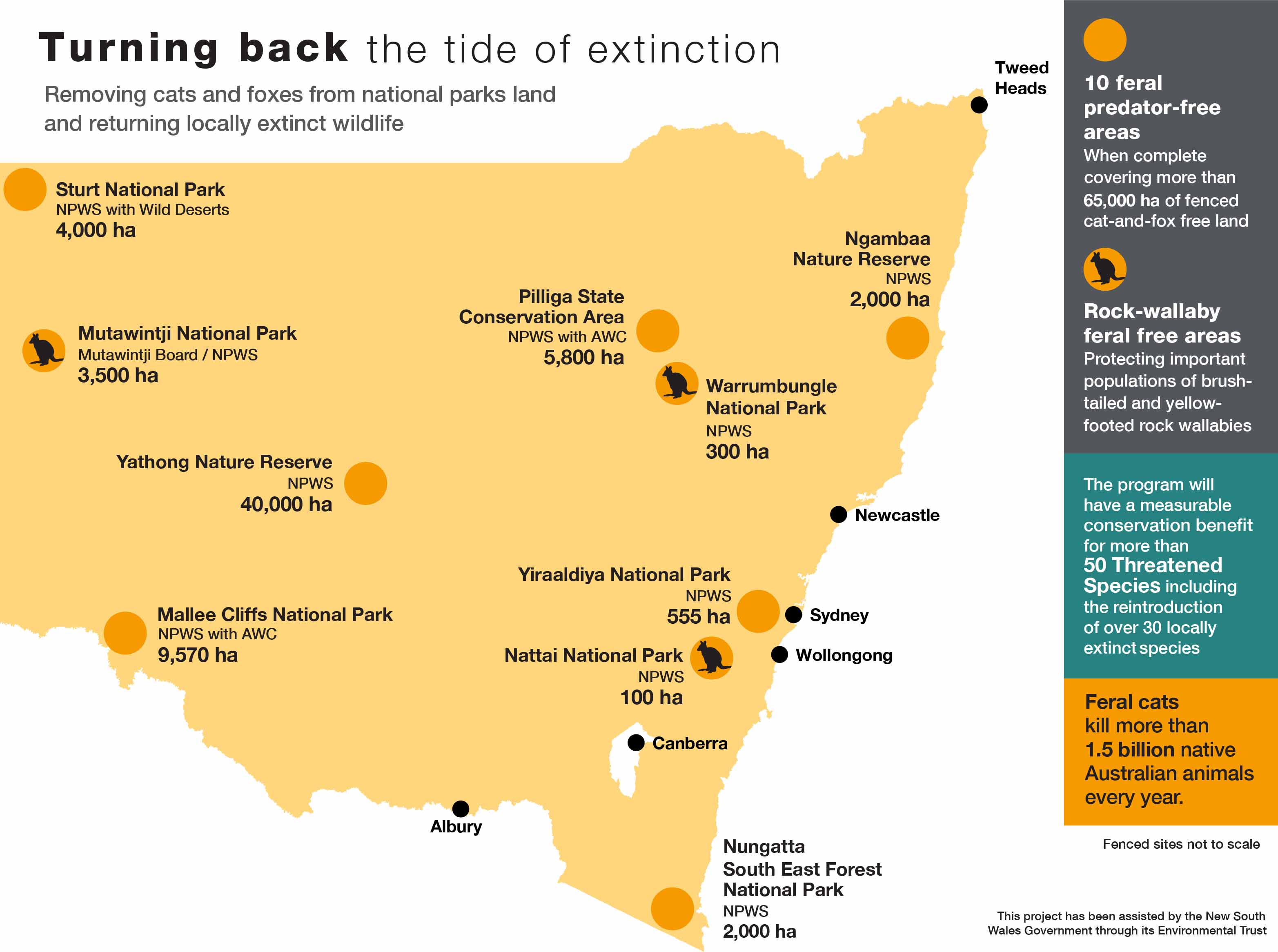
One of 10 feral predator-free areas on NSW national parks estate is at Mallee Cliffs National Park on Barkandji Country.
Mallee Cliffs National Park is being restored as a safe haven for 10 locally extinct mammal species.
The 9,570-hectare feral predator-free area protects semi-arid mallee woodland behind 37 kilometres of 1.8 metre high feral predator-proof fencing. Once the fencing was completed in 2019, feral animals, including predators such as cats and foxes, were removed from the area.
Spanning almost 100 square kilometres, Mallee Cliffs is currently the largest safe haven in the feral predator-free area network. Through the partnership, native mammals that had disappeared from Mallee country are being returned across a substantial area of protected habitat.
Nine mammal species that had disappeared from the landscape, some for more than a century, have already been reintroduced to Mallee country, including:
- bilby
- greater stick-nest rat
- numbat
- brush-tailed bettong
- red-tailed phascogale
- Mitchell’s hopping mouse
- burrowing bettong
- bridled nail-tailed wallaby
- Shark Bay bandicoot.
The final planned reintroduction for the site is the western quoll. In addition to the 10 locally extinct mammal species being reintroduced, the feral predator-free area provides conservation benefits for other resident threatened species, including malleefowl and western pygmy-possums.

How are the reintroduced species going?
Even at this early stage, teams are seeing encouraging signs of bounce-back, including:
- bilby numbers increasing from 107 founders to an estimated population of more than 1,800 animals
- high rates of survival of all 9 mammal species reintroduced to date
- a markedly higher number of active malleefowl mounds inside the fence compared with outside
- record numbers of endangered western pygmy possums detected inside the fence
- numbats now detected across 52% of the fenced area, with monitoring showing steadily increasing activity.

World-leading conservation project
The Mallee Cliffs site is part of a network of 10 feral predator-free areas across New South Wales. Once complete, the network will protect almost 65,000 hectares of national park estate from feral predators, providing conservation benefits for more than 50 threatened species.
Across these sites, locally extinct native animals are being returned to landscapes from which they have been absent for decades. Ecosystem engineers such as bilbies help return the bush to the way it functioned before Europeans introduced feral pests.
The feral predator-free area network is one of the most significant ecological restoration projects in the state's history.