A safe place in the red soil
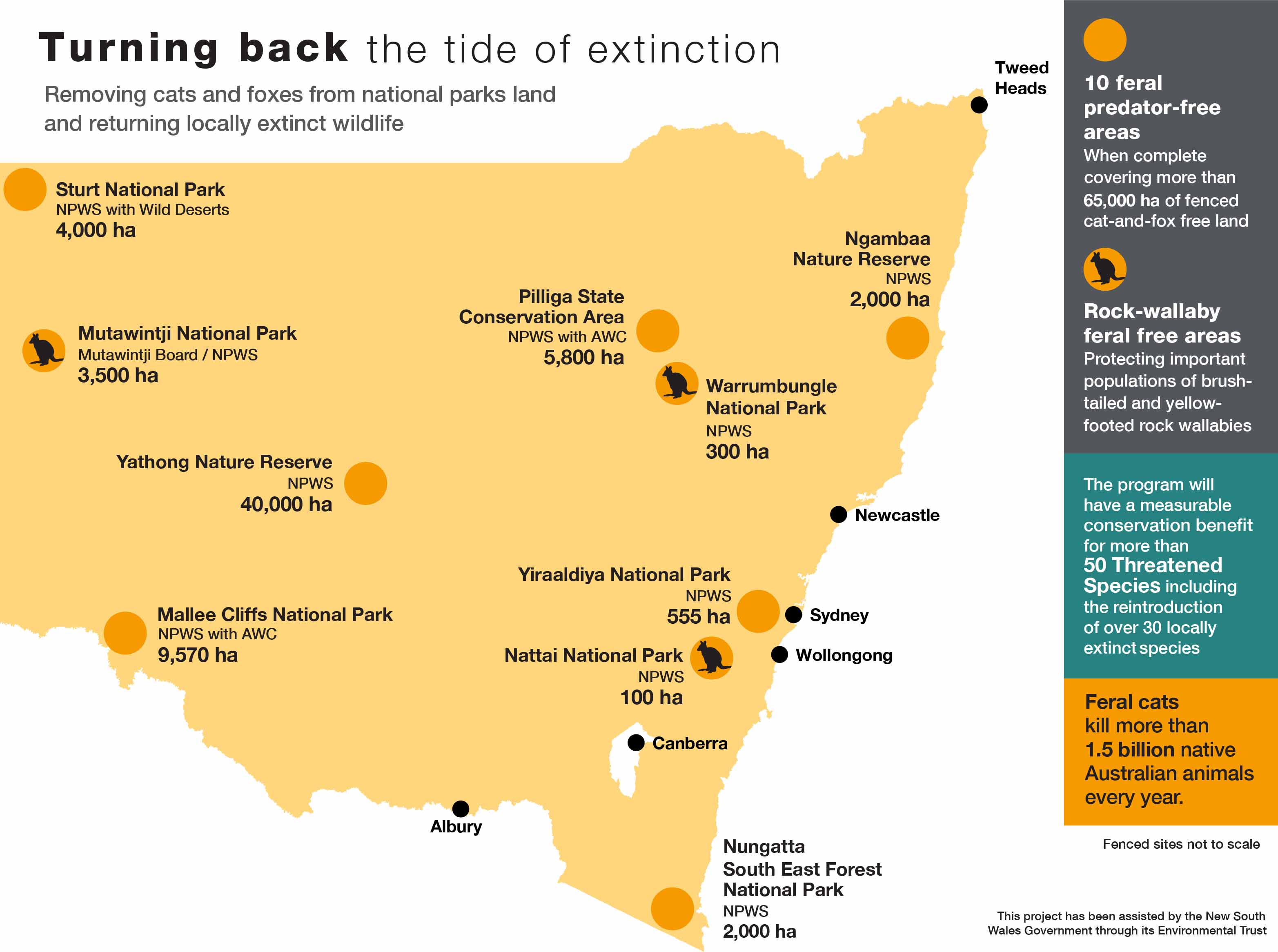
One of 10 feral predator-free areas on NSW national park estate is at Sturt National Park, near Tibooburra on Wadigali, Malyangapa and Wongkumara Country.
Sturt National Park is being restored as a safe haven for threatened mammals that have disappeared from the landscape.
The project includes two 2,000-hectare feral predator-free exclosures in the arid red landscape of north-west New South Wales. Once construction was completed in early 2020, feral animals, including predators such as cats and foxes, were removed before native mammals were reintroduced.
Six locally extinct mammal species have now been reintroduced:
- bilby
- crest-tailed mulgara
- Shark Bay bandicoot
- golden bandicoot
- burrowing bettong
- western quoll.
Through the partnership, the project is also investigating how reintroduced mammals can be supported beyond the fenced exclosures, The 100 square kilometre ‘Wild Training Zone’ is helping to inform future opportunities for safe releases in areas where cats and foxes can be controlled to low densities.
In addition to the locally extinct mammal species being reintroduced, the project provides conservation benefits for resident threatened species, including the dusky hopping mouse, sandy inland mouse, desert mouse and Eyrean grasswren.
-

This threatened dusky hopping mouse (Notomys fuscus) is a resident of Sturt National Park -

A camera trap snaps crest-tailed mulgaras (Dasycercus cristicauda) Maurice and Moneypenny
How are the reintroduced species going?
Even at this early stage, teams are seeing encouraging signs of bounce-back, including:
- bilby numbers increasing from the 40 animals originally released in 2020–21 to well over 500 animals in 2025
- markedly higher detections of resident small mammals, including dusky hopping mice and sandy inland mice, inside the fenced area
- western quolls, bilbies, golden bandicoots, burrowing bettongs and crest-tailed mulgara released beyond the fence into the ‘Wild Training Zone’, with ongoing evidence of persistence
- monitoring confirming the first known western quoll born in the Wild Training Zone.

World-leading conservation project
The Sturt National Park site is part of a network of 10 feral predator-free areas across the state. Once complete, the network will protect almost 65,000 ha of national park estate from feral predators, providing conservation benefit for more than 50 threatened species.
Across these sites, locally extinct native animals are being returned to landscapes from which they have been absent for decades. Ecosystem engineers such as bilbies help return the bush to the way it functioned before Europeans introduced feral pests.
The feral predator-free area network is one of the most significant ecological restoration projects in NSW history.