'Ecosystem engineers' return to the Pilliga
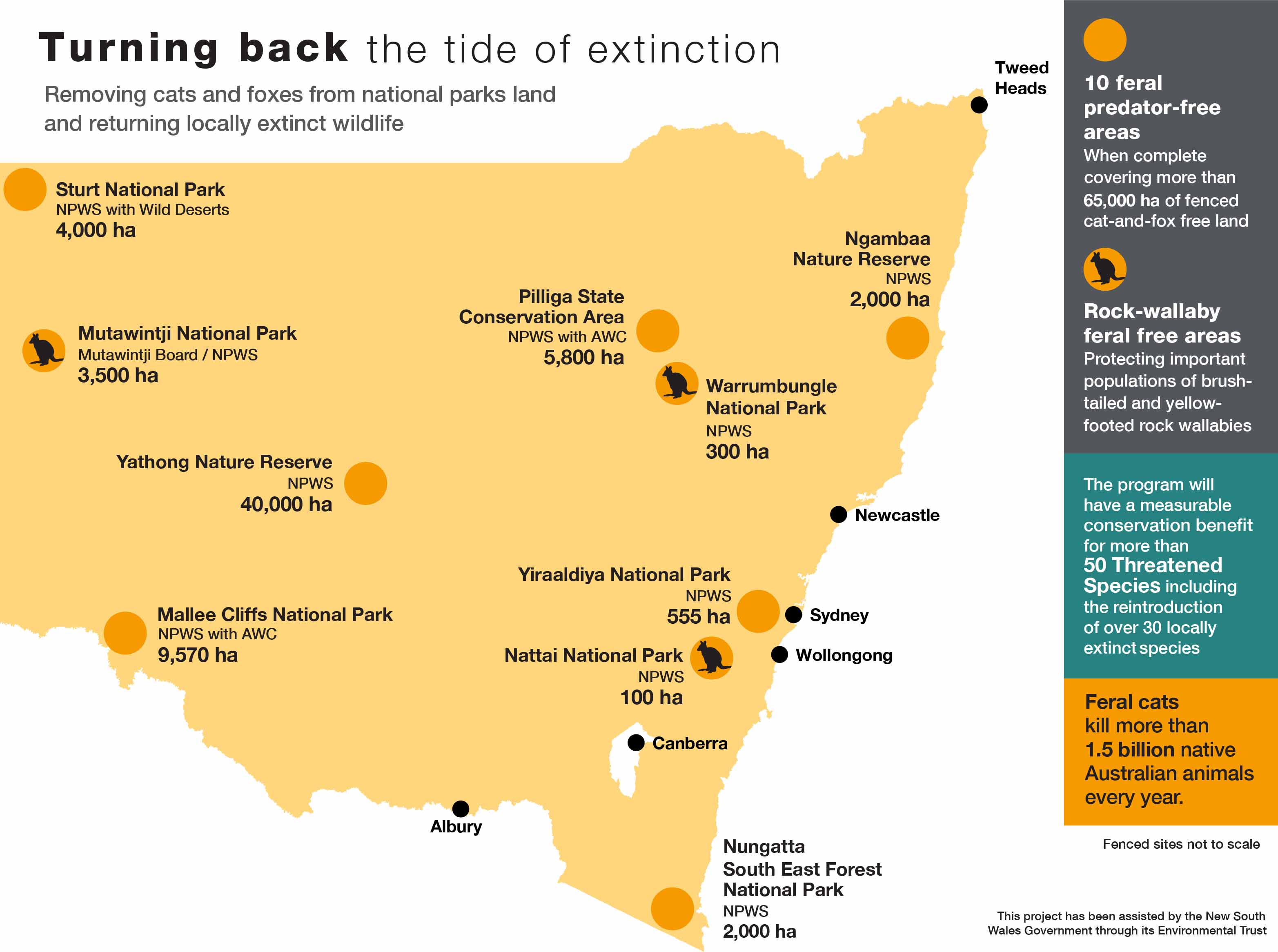
One of 10 feral predator-free areas on the NSW national parks estate is in the Pilliga State Conservation Area, on Gamilaraay Country south of Narrabri in north-west New South Wales.
The Pilliga feral predator-free area is being restored as a safe haven for 6 locally extinct mammal species.
The 5,822-hectare feral predator-free area protects mesic temperate woodland behind 32 kilometres of 1.8 metre high feral predator-proof fencing. Once the fencing was completed in 2018, feral animals, including predators such as cats and foxes, were removed from the area.
Five mammal species that had disappeared from the landscape have already been reintroduced to the Pilliga, including:
- bilby
- bridled nail-tailed wallaby
- brush-tailed bettong
- plains mouse
- Shark Bay bandicoot.
The final planned reintroduction for the site is the western quoll.
Through the partnership, mammals that once shaped the Pilliga woodland are returning to the landscape. Many act as 'ecosystem engineers', with digging, burrowing and foraging helping restore important ecological processes across the site.
In addition to the locally extinct mammal species being reintroduced, the feral predator-free area provides conservation benefits for resident threatened species, including the endemic Pilliga mouse.


How are the reintroduced species going?
Even at this early stage, teams are seeing encouraging signs of bounce-back, including:
- bilbies now occupying 100% of the fenced area, with monitoring confirming ongoing breeding since the original 60 founders were reintroduced in 2018
- bridled nail-tailed wallaby numbers increasing from 42 animals reintroduced in 2019 to an estimated population of 385 in 2025
- yellow-footed antechinus detected at levels around 10 times higher inside than outside the fence
- higher occupancy and abundance of the endemic and threatened Pilliga mouse inside the fence than outside
- all 55 brush-tailed bettongs released in August 2022 surviving the translocation and initial post-release monitoring period.

World-leading conservation project
The Pilliga site is part of a network of 10 feral predator-free areas across New South Wales. Once complete, the network will protect almost 65,000 hectares of national park estate from feral predators, providing conservation benefits for more than 50 threatened species.
Across these sites, locally extinct native animals are being returned to landscapes from which they have been absent for decades. Ecosystem engineers such as bilbies help return the bush to the way it functioned before Europeans introduced feral pests.
The feral predator-free area network is one of the most significant ecological restoration projects in the state's history.