Bushfire is a fact of life in New South Wales. The state is one of the most susceptible areas to bushfire in the world.
Bushfires can occur at any time but are most common and dangerous from October to March. This is known as the bushfire season. Weather patterns suggest that New South Wales is becoming warmer and drier and that bushfires may become more frequent and intense.
The National Parks and Wildlife Service (NPWS) carries out hazard reduction burns and other activities to reduce the risk of bushfire in national parks. However, the threat of bushfire cannot be eliminated and fire operations can pose a risk for national park visitors and neighbours.
Fire danger ratings
Fire danger ratings give you an indication of the consequences of a fire, if one was to start. The higher the fire danger rating, the more dangerous the conditions.
You can use the fire danger ratings as a trigger for actions in your bush fire survival plan, such as leaving bushfire risk areas on days of Extreme or Catastrophic fire danger.
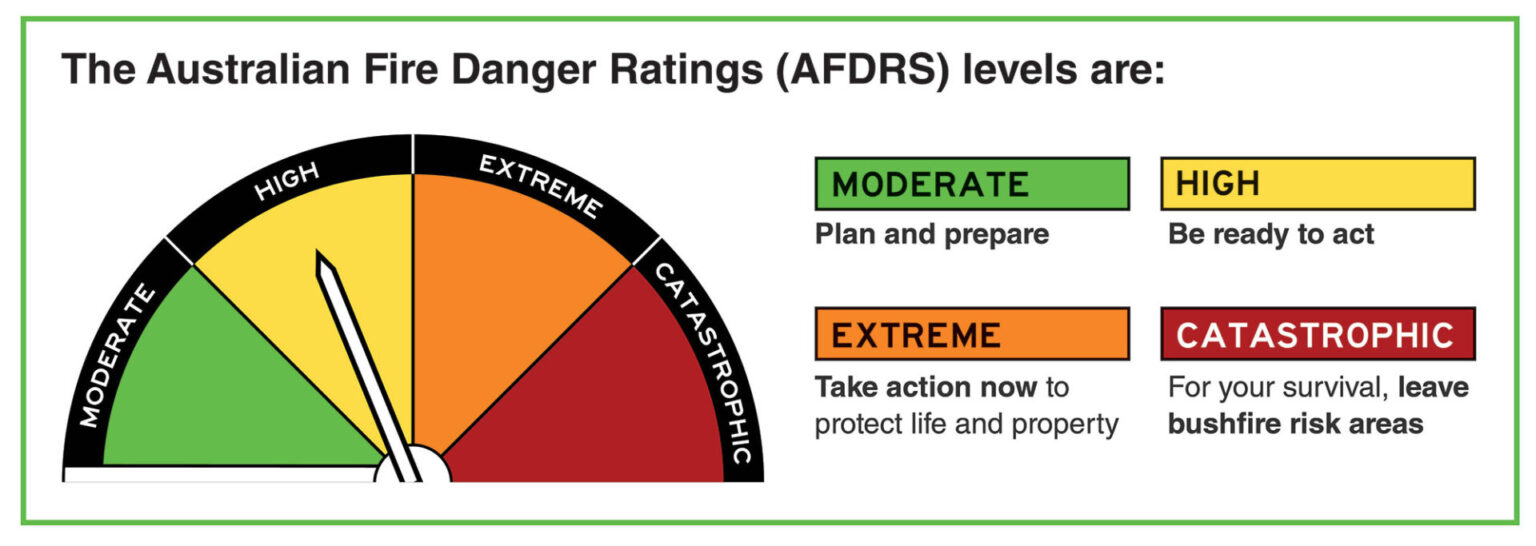
The Australian Fire Danger Rating levels are:
- Moderate: plan and prepare
- High: be ready to act
- Extreme: take action now to protect life and property
- Catastrophic: for your survival, leave bushfire risk areas.
To find out more about the rating system, visit Australian Fire Danger Rating System.
To check the fire danger ratings in New South Wales, visit the NSW Rural Fire Service website.
Fire bans
During the bushfire danger period, the Commissioner of the NSW Rural Fire Service may declare a total fire ban for particular fire weather areas in New South Wales or statewide.
The NPWS may also declare a park fire ban or even close particular reserves due to the potential risk to visitors from fire.
To find out where and when a total fire ban has been declared, and what rules apply, visit the NSW Rural Fire Service website.
Be prepared
If you live in a bushfire-prone area or are planning to visit a national park, make sure that you prepare for the fire season by recognising the bushfire risk and knowing how to respond.
The NSW Rural Fire Service provides specific information on current fire events, warnings and alerts and information on how to prepare yourself and protect your home during the bushfire season.
The NSW National Parks and Wildlife Service website offers information on fire safety, fire bans and park closures. Before visiting a national park, it is important that you check for current fire alerts and notifications of park fire bans, total fire bans and park closures.