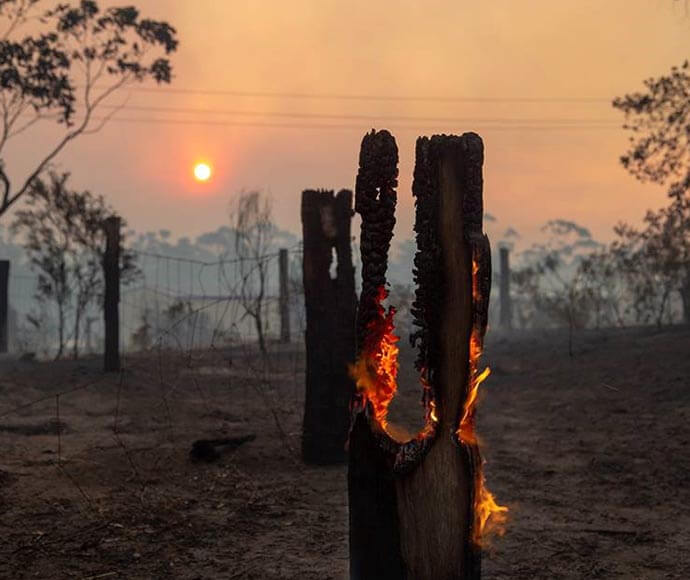
Fire is a major environmental factor in Australian landscapes. The effects of fires are visible in nearly all vegetation types, differing from each other in terms of frequency of fire, fire intensity, fire severity, fire season and the size and patchiness of the burnt areas. The frequency (how often fire occurs), intensity (how hot the fire burns), seasonality (time of the year when fires burn) and patchiness (the amount of vegetation burnt) of the fire define what is referred to as the fire regime of an area.
The NSW National Parks and Wildlife Service carries out hazard reduction burns (also known as prescribed burning) and other activities to reduce the risk of bushfire in our national parks and reserves.
Given the complexity of bushfires and the strong connections between human systems (for example, land use and management), a better understanding of the impacts of climate change on the drivers of fire regimes, biodiversity and other assets is an important factor to plan and prepare for future fires.
There is considerable uncertainty surrounding the nature and effects of climate change on fire regimes and fire management, particularly the effectiveness of prescribed burning and the impacts on biodiversity. Future climate change is expected to increase bushfire risk through more adverse fire weather, including a projected increase in the number of days of heightened fire danger, and a potential lengthening of the fire season, over much of New South Wales.
Projected climate change will also lead to changes in fuel dynamics, via changes to vegetation composition and structure. Windows of opportunity for prescribed burning may also change – narrowing in some places and widening in others. It is important to know both the trajectory and magnitude of potential change.
Fire is a major factor that drives population turnover in many plants and animals. In a changing climate, hazard reduction burning and bushfires could affect the ability of species to persist under an altered fire regime. It is critical to identify likely thresholds of species decline for each component of the fire regime and apply these thresholds to ongoing fire management.
The Climate change impacts on bushfire risk in NSW (PDF 804KB) report provides an overview of literature on possible future changes in fuel accumulation, fuel moisture, fire weather and ignition and the implications of such changes for bushfire risk in the state.
Through research, we are improving operational guidelines for managing fire and minimising the impact of hazard reduction and bushfire suppression activities on natural resources, such as biodiversity, drinking water catchments and urban air catchments.
The Department of Climate Change, Energy, the Environment and Water is collaborating with other government agencies and research institutions to provide updated information on the potential impacts of climate change on bushfires.