Everlasting Swamp was historically modified for agriculture, and drainage infrastructure has altered the wetland's natural water flow, affecting the plants and ecosystem.
Since 2014, the NSW Government has acquired over 80% of the wetland for conservation. One prominent structure, the Sportsmans Creek Weir, was built to manage tidal flow and volume. However, it is nearly 100 years old and is no longer working well.
The NSW Department of Climate Change, Energy, the Environment and Water has engaged consultants to develop a restoration plan for Everlasting Swamp and is working in close collaboration with NSW National Parks and Wildlife Service and the Clarence Valley Council. This plan will assess restoration options, identify challenges, and recommend the best solution for restoring the wetland.
The project also aims to test feasibility, build capacity, and explore opportunities for scaling up Blue Carbon initiatives across New South Wales. Blue Carbon projects restore coastal wetlands to promote habitats such as mangroves and saltmarsh, to sequester carbon and generate Australian Carbon Credit Units under the Australian Carbon Credit Unit Scheme.
What is Blue Carbon?
Blue Carbon is carbon captured from the atmosphere and locked up in coastal and marine ecosystems, including seagrass meadows, saltmarshes, mangroves and supratidal forests.
Since European settlement, Australia has lost about half of its saltmarshes, nearly three-quarters of its mangroves and one-quarter of its seagrass meadows. Restoring these ecosystems will help capture more carbon from the atmosphere and store it in Blue Carbon ecosystems.
The carbon sequestration capacity of NSW Blue Carbon ecosystems is estimated to be equivalent to the emissions of 500,000 households per year. Expanding Blue Carbon projects will contribute to NSW net zero goals.
Blue Carbon projects can also improve water quality, mitigate against species loss and restore the health of coastal wetland ecosystems.
Key project benefits
The Everlasting Swamp Restoration Project aims to restore wetland ecosystems that are natural to the local land and environment of the Clarence River and its floodplains.
The project will consider conservation priorities, local expertise, community values and cultural knowledge to inform restoration options. It will focus on improving the water quality and addressing the area's acid sulfate soil legacy. Once completed, this project will be the first demonstration site in New South Wales, which will inform future restoration initiatives.
Project progress
The department is aiming to exhibit a draft restoration plan in 2025.
The project will also actively consult with local stakeholders including Aboriginal communities and adjacent landholders.
This project is funded by the NSW Government under the Marine Estate Management Strategy and NSW Estuary Asset Protection Program. The 10-year Marine Estate Management Strategy was developed by the NSW Marine Estate Management Authority to coordinate the management of the marine estate.
-
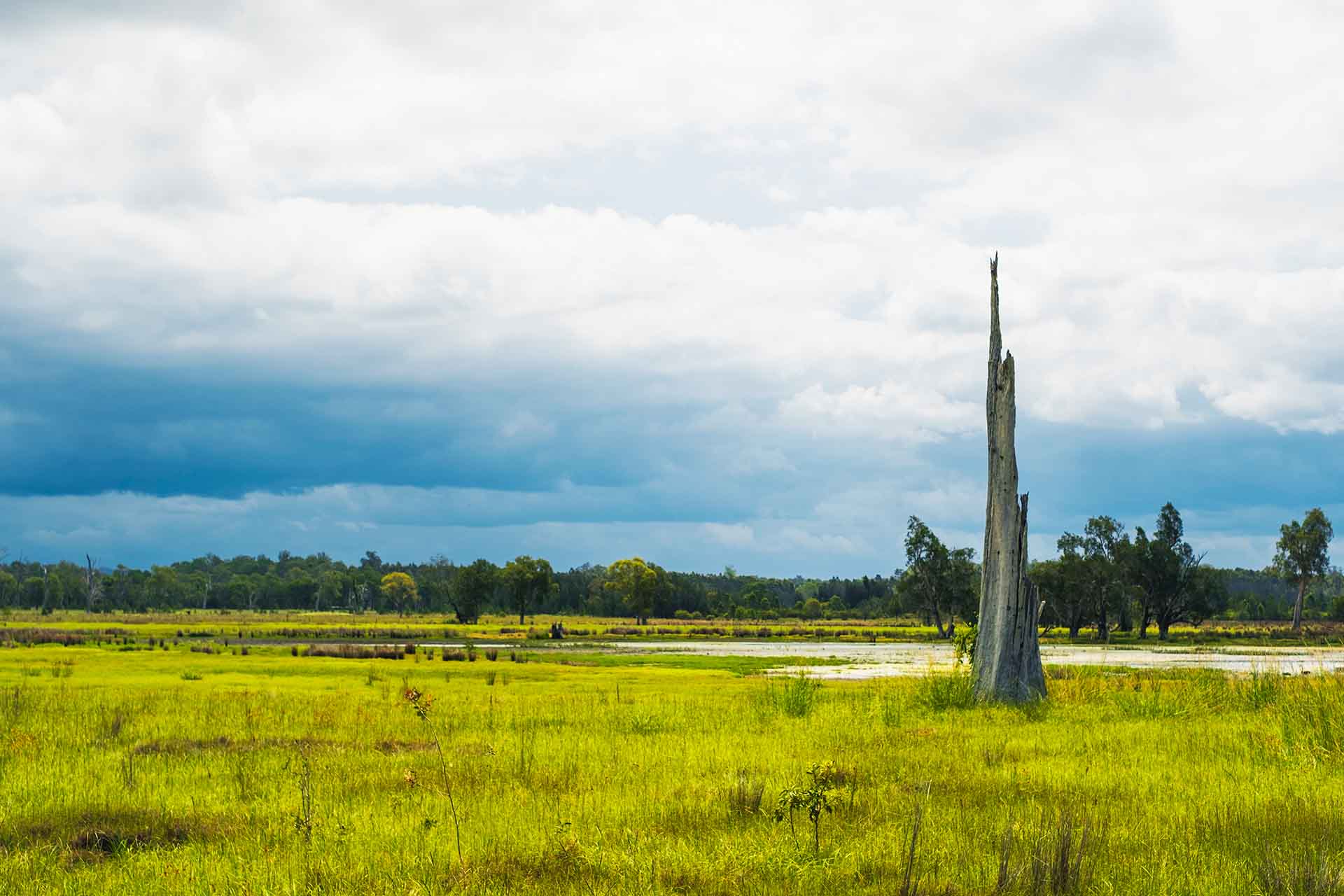
Everlasting Swamp National Park -
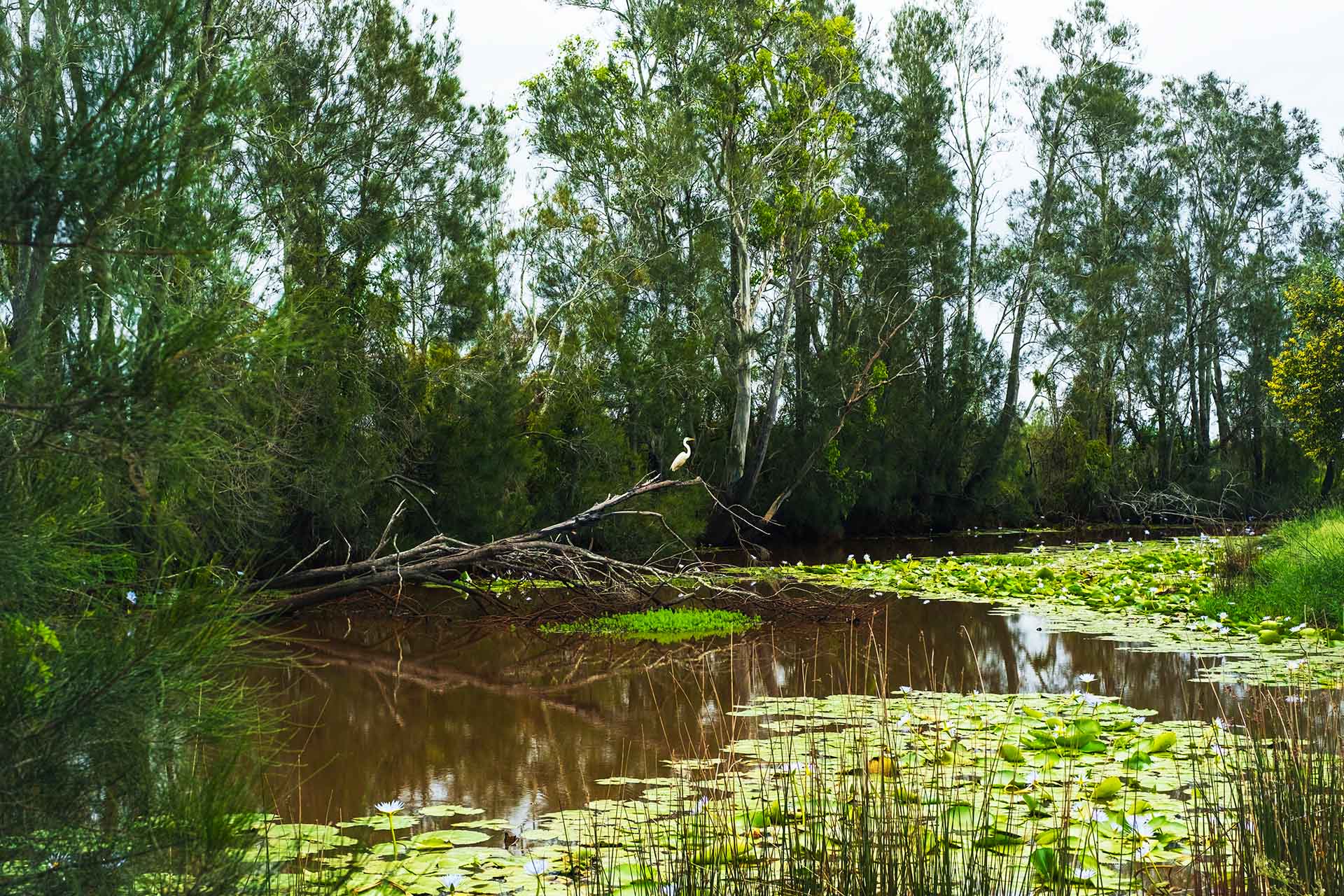
Everlasting Swamp National Park